Information
Challenges Information This is a write-up of the Surabaya Hacker Link challenge for the Underground machine. This machine was built using one of the vulnerable web applications that SHL commonly uses during demo sessions, with several vulnerabilities patched to make the challenge slightly more interesting.
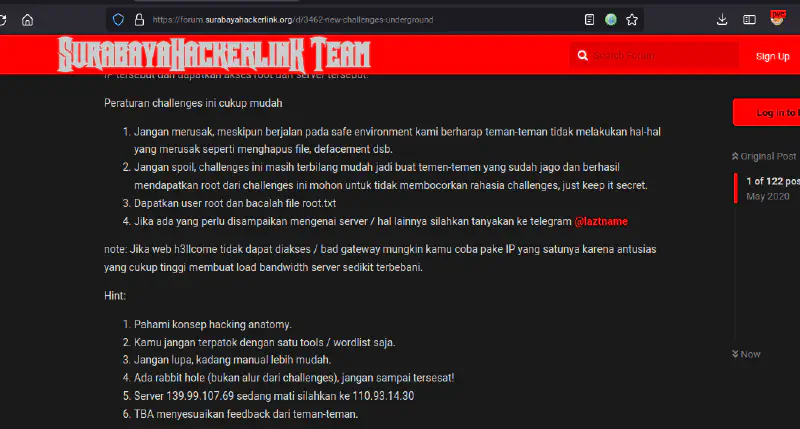
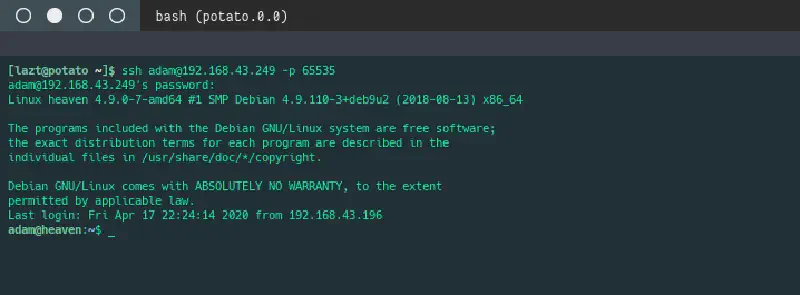
Challenges On the Surabaya Hacker Link forum there is information about a new challenge replacing Heaven challenges (the Heaven VM write-up can be found here). The information on …
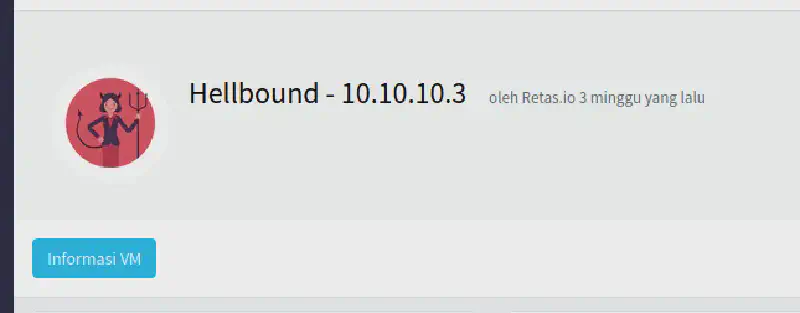
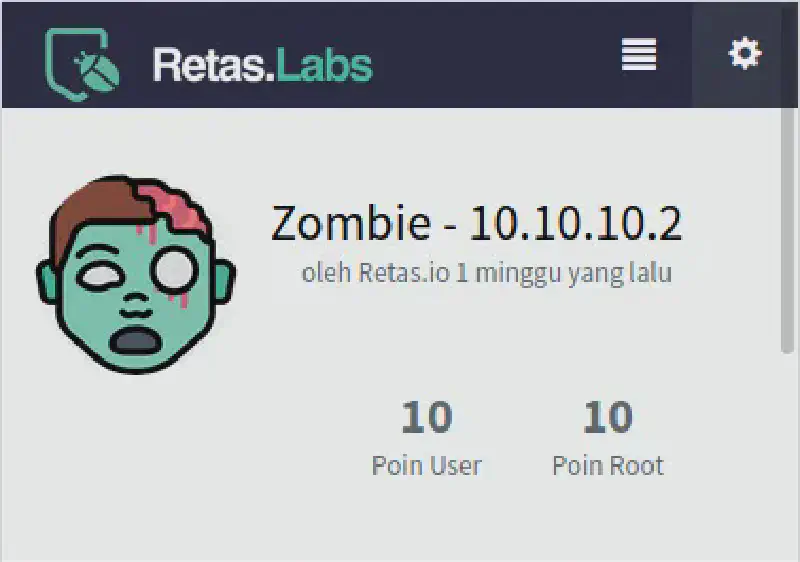
Let’s get straight to the point: this machine is hard, period. When the labs were first launched there were three machines: Zombie, Hellbound, and Anonymouz. In my opinion this one is quite difficult, probably due to my lack of experience in exploitation and intuition. Until the time this write-up was written, the author still hadn’t obtained the root user flag and was stuck at www-data. Fortunately, the user flag is readable by www-data, so it can still be submitted.
Retas.io is a company from PT. Solusi Siber Teknologi that offers various security services ranging from Vulnerability Assessment, Penetration Testing, to other specialized IT and security-related needs.
Recently retas.io launched a new product called retas labs which is intended to help new players entering the Infosec world. These labs are somewhat similar to Hack The Box. By using a VPN we are required to solve challenges using our IT knowledge and skills. Not only that, they also plan to …
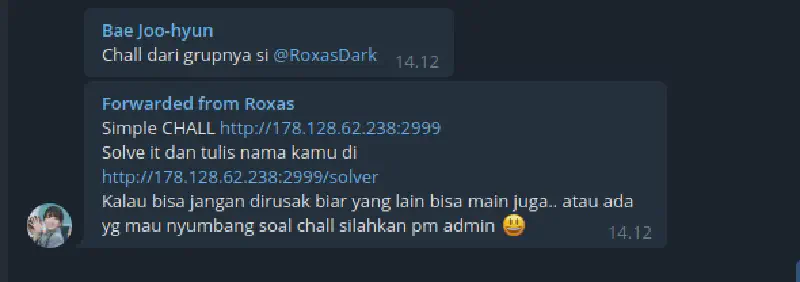
After a long time without creating or solving challenges due to increasingly limited free time and assignments piling up, I finally received information about a challenge from a friend in a Telegram group. This challenge was created by another community called Malang Hacker Link. The challenge is quite unique and fun to solve because no “magic tricks” are required.
From the information provided, I immediately opened the link and found a form with two fields: first name and last name. Since we …
Since this machine has already been retired and is no longer considered relevant as a challenge, I decided to write a solution explaining how to complete the VM Heaven challenge from Surabaya Hacker Link.
In fact, solving this challenge does not require special hacking tools such as sqlmap or metasploit because the challenge is relatively easy. No advanced hacking knowledge is required. As long as you are familiar with the GNU/Linux operating system and understand the basics of pwning (owning) a …
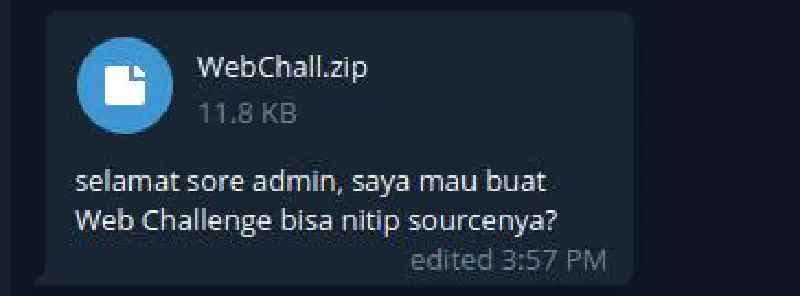
As usual, in the Surabaya Hacker Link group there are various challenges. Not only admins create them, but members also submit challenges, and I helped deploy this one. Not only deploying it, of course I also tried solving it :3
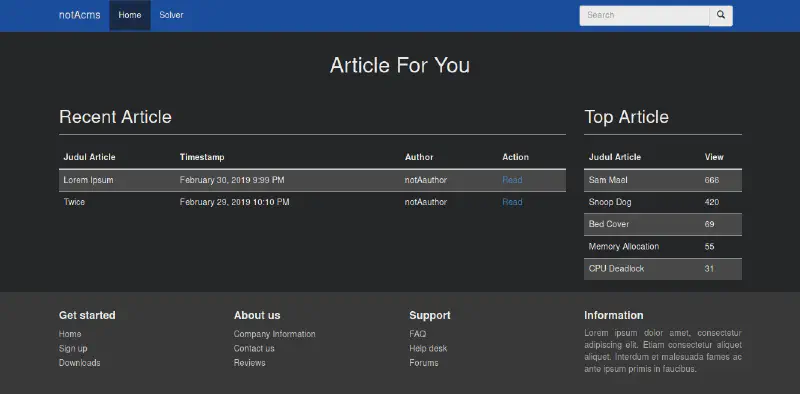
Without further ado, we accessed the challenge at challshl.com.
Since I was involved during deployment, I had a slight idea where the bug was located. The cool term would be white box pentest, meaning testing by reading the website source code cmiiw.
After a long time without creating a challenge, I finally decided to make a simple one.
This challenge is themed as a QR Code Generator, but the vulnerability is not in the QR Code itself. Below is a simple way to solve it.
Gathering Information Challenge Given
As usual, the challenge was posted in the Surabaya Hacker Link group. There was no clue at all, so we directly accessed the website. It turned out to be a QR Generator page with name and Instagram input fields.
In the Surabaya Hacker Link Telegram group, I and @ytyao often create challenges such as web hacking, reversing, and others. However, in a previous challenge there was a small incident, the website was hacked. Well, the website was intentionally built to be hacked, but this hacker performed a mass wipe by deleting all files and folders. From that incident I learned something new, post incident handling, or commonly called Incident Response.
This challenge was created when I was confused about how to explain the LFI bug Local File Inclusion during a secure coding session at STTS. Since I was quite bored with LFI to Local File Read via wrapper, I searched for LFI to RCE methods other than through self/proc/environ and found LFI to RCE via Access Log Poisoning. However, because hosting environments could not read log files in txt format, a file upload feature was created that only allows txt files. Below is the Write Up.
Before getting into DOM XSS, let’s first get to know DOM, what is DOM?, needle?
DOM stands for Document Object Model, which means a hierarchical structure in an HTML document, so in HTML code there is a kind of family tree
for XSS you can read here
In the case of DOM Based XSS, the XSS payload will change HTML content through this DOM????
Example: DVWA, DOM XSS, Level:Low
There is a language selection feature, let’s check the script