Overview Web phishing is one of the attack methods most frequently used by attackers. In a phishing attack, the attacker creates a fake website that imitates a legitimate website. This fake website is usually used to steal sensitive information from victims, such as login credentials, credit card information, and others.
A common perception is that phishing websites always use the HTTP protocol. However, is that really the case? Do phishing websites never use the HTTPS protocol?
What Is a Credential Attack? A credential attack or credential-based attack is a hacking attempt to take over someone’s account by stealing a username and password. Usually this is done through techniques like phishing, credential stuffing, and brute force.
Simply put, attackers spy, guess, or try thousands of password combinations to get into your account. After that, they can access all the data inside it, such as email accounts, social media accounts, game accounts, and even banking …
Execution After Redirect or EAR is a technique used to execute code after the redirect process. This technique is usually used to bypass several security features that exist in web applications. In this article, we will discuss how to exploit EAR using Burp Suite.
What is Execution After Redirect (EAR)? Execution After Redirect is usually found in web applications with native style code that use a redirect mechanism to direct users to another page after performing a certain process, such as …
This is actually an old case that went viral last year. While browsing Facebook, I frequently encountered sponsored job advertisements claiming to be from well-known companies — especially in mining, factory, and other blue-collar sectors — such as PT Epson, PT Unilever, PT Indofood, and other major corporations.
These ads direct applicants to register online by filling out personal information such as:
Full name Address Phone number National ID number And other personal details Unfortunately, …
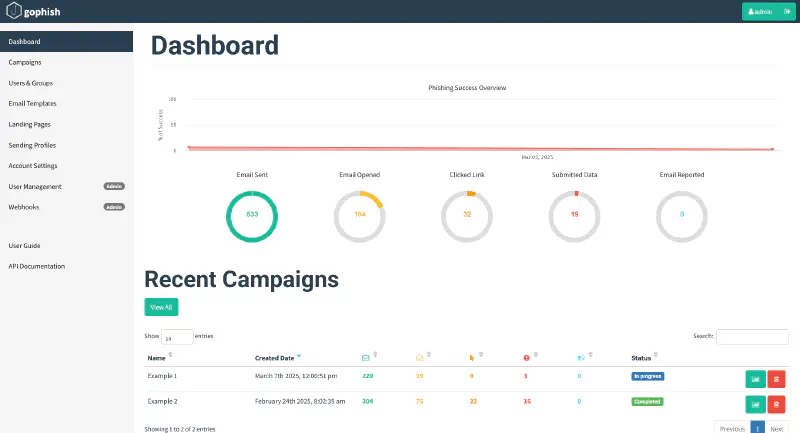
Introduction Phishing is an attack carried out by influencing someone to provide personal or confidential information. This attack is usually conducted by sending fake emails that resemble official emails from certain companies or organizations. In a phishing attack, the attacker attempts to obtain sensitive information such as username, password, and even credit card information.
As an organization that is aware of information security, it is important for us to conduct phishing simulations …
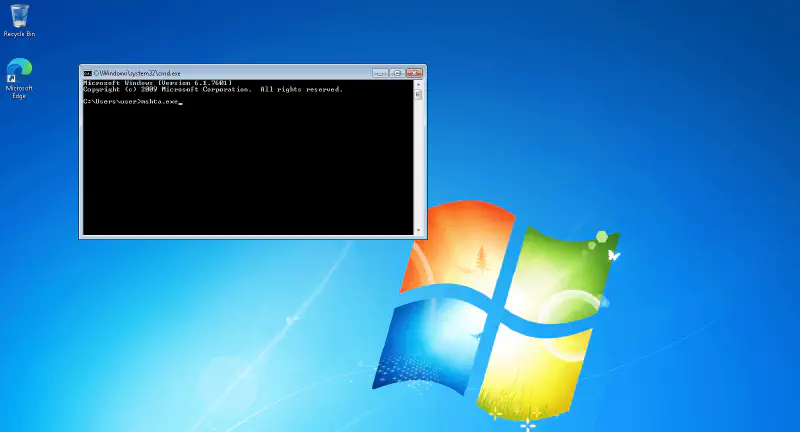
What is mshta.exe? mshta.exe is a Windows file system utility used to run Microsoft HTML Application (.HTA) files. This program allows the execution of VBScript or JScript-based scripts, making it a useful tool for administrators but also a tool that is often abused by threat actors.
Why is mshta.exe often used by Threat Actors? Threat Actors frequently abuse mshta.exe to execute malicious code in order to avoid detection by antivirus or other security solutions (EDR). Some reasons why mshta.exe …
As we know, DNS is a service responsible for converting hostnames into IP addresses. It sounds simple, but some people do not realize that this DNS service can also cause security vulnerabilities. The following are several events I have experienced related to DNS and its security. Keep in mind this does not cover all vulnerabilities that exist in DNS, such as DNS Spoofing, DNS Amplification, DNS Hijacking, DNS Rebinding Attack, and other attacks, only several events that I have personally …
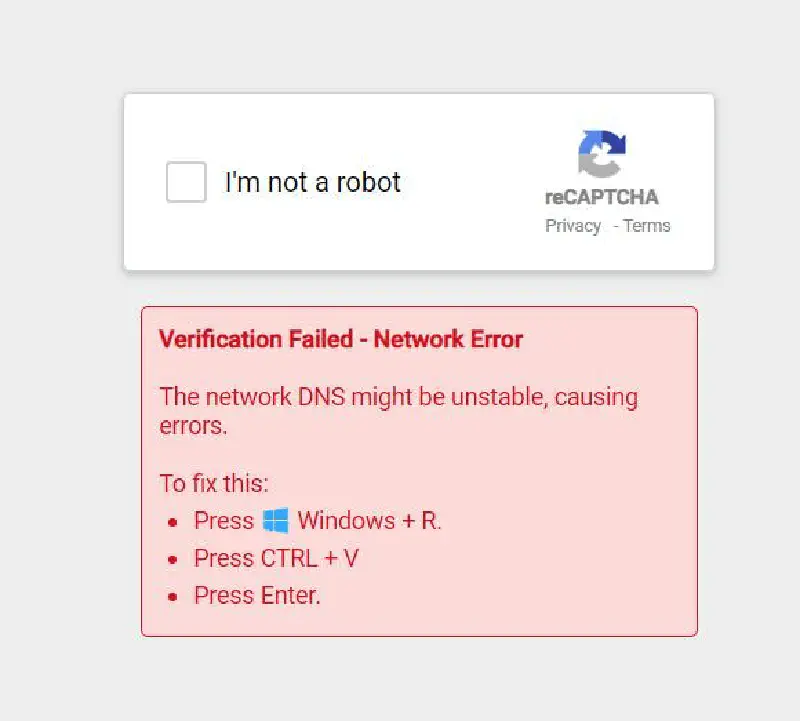
The Beginning This December I received a notification from a Facebook group that I follow. In the post (now deleted), there was a screenshot like the image above, complete with the caption: “Is this dangerous or not? Why does the captcha look strange?”
In the comments, the Thread Starter added another screenshot containing text that had to be pasted into the run.exe program as shown below
It is very clear that this is malware. mshta is a built-in Windows file whose function is to …
Information
Challenges Information This is a write-up of the Surabaya Hacker Link challenge for the Underground machine. This machine was built using one of the vulnerable web applications that SHL commonly uses during demo sessions, with several vulnerabilities patched to make the challenge slightly more interesting.
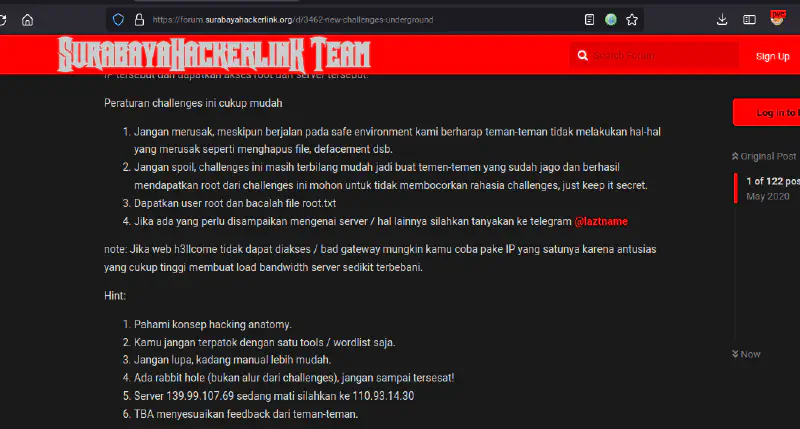
Challenges On the Surabaya Hacker Link forum there is information about a new challenge replacing Heaven challenges (the Heaven VM write-up can be found here). The information on …
Let’s get straight to the point: this machine is hard, period. When the labs were first launched there were three machines: Zombie, Hellbound, and Anonymouz. In my opinion this one is quite difficult, probably due to my lack of experience in exploitation and intuition. Until the time this write-up was written, the author still hadn’t obtained the root user flag and was stuck at www-data. Fortunately, the user flag is readable by www-data, so it can still be submitted.